Police Statue
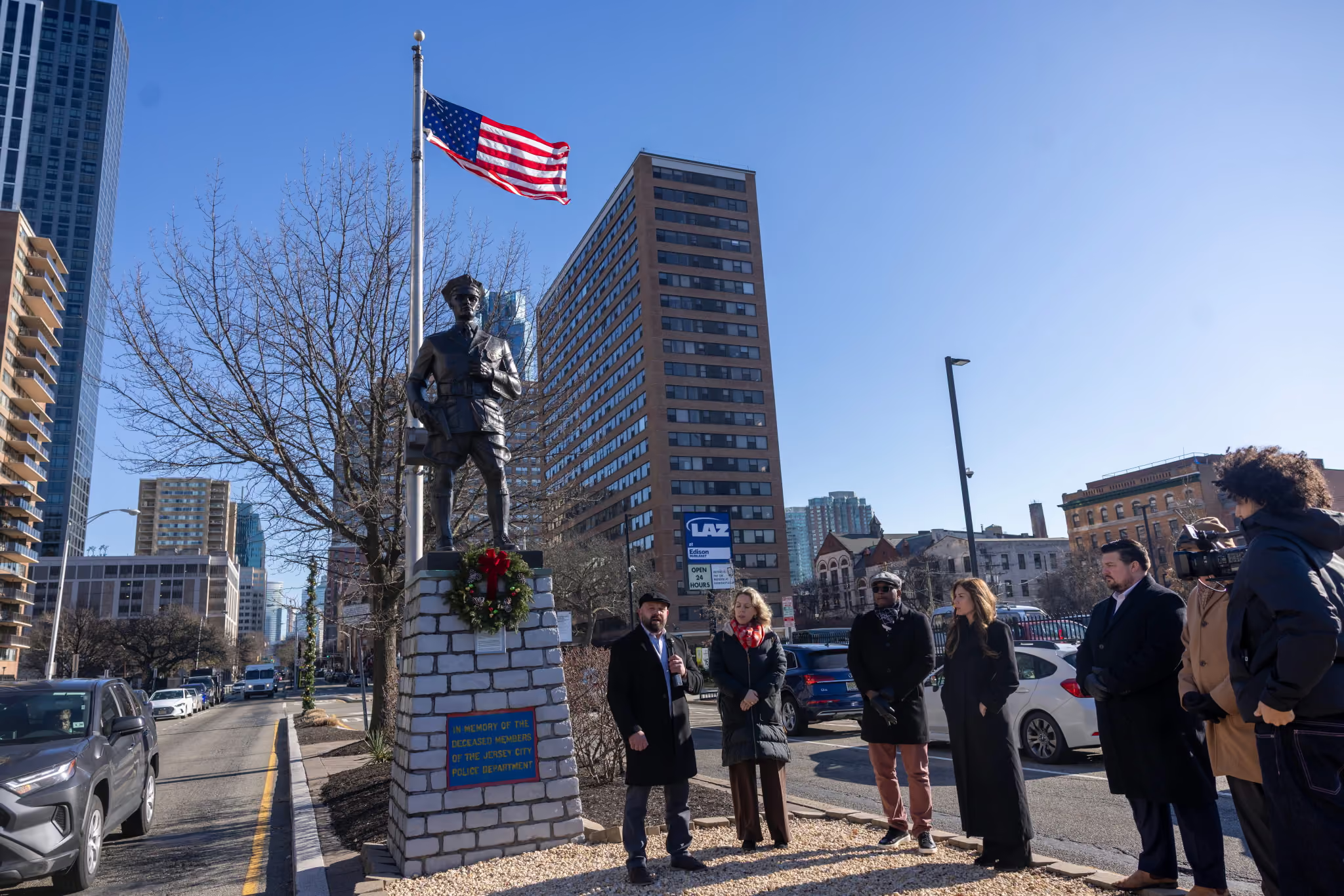
The statue today, still standing in tribute — the 1976 inscription visible at its base.
1887
Burial plots gifted at Bayview Cemetery
1936
Statue dedicated by Giacomantonio
1961
Stolen & recovered the first time
1975
Stolen & recovered a second time
1976
Re-dedicated behind City Hall
The Beginning
In May of 1887, the Trustees of Bayview Cemetery on Garfield Avenue presented burial plots 42 and 44 to officials of the Jersey City Police Department, comprising about 292 sq. ft. to each plot. They were to be used solely for the burial of deceased members who had died without relatives, or the means to be buried elsewhere.
At the time the gift was given, each member of the Department was assessed eight cents a year just before Decoration Day (now Memorial Day) for the upkeep of the plots. The assessment was discontinued about 1903. As the years went by, the plot was sadly neglected. Many policemen were unaware of its existence.
On Sunday, July 7, 1935, John R. Ryan, Commander of the VFW General Joseph Wheeler Post #62, presented a Flag Pole Marker to the Police Department to honor the deceased members buried in this plot. At that time, Chief Daniel Casey proposed to erect a monument at this location in commemoration of those already buried or who would be interred there, and declared that the monument would be dedicated on Memorial Day 1936.
To accomplish this, he ordered that Patrolmen, Detectives, Sergeants and Lieutenants be assessed ten cents each month, and Captains, Inspectors, Deputy Chiefs and the Chief twenty-five cents each month, beginning August 1, 1935. These monies were collected on the 15th of the month by the Captains of the Precincts and Bureaus and turned over to Captain Frederick Drewen of the 5th Precinct, who served as treasurer of the memorial committee. On April 9, 1936, Chief Casey called for the discontinuation of the assessment and praised all the members of the Department, and Captain Walter Ciecciuch and the officers of the Police Mutual Aid Society, for their financial help.
At a Glance
Plots gifted: May 1887
Assessment discontinued: 1903
Flag pole marker gifted: July 1935
Monument proposed by: Chief Daniel Casey
The Sculptor
The man chosen to create a fitting tribute to Jersey City's finest was Archimedes Giacomantonio. Born in Jersey City in 1905, two blocks from City Hall, he attended Dickinson High School. He took his initial art training at the da Vinci Art School in New York, then studied for five years in Italy at the Royal Academy in Rome.
Giacomantonio had a studio at 194 Fairview Avenue. He was 30 years old when he took on this heroic undertaking for the Police Department. He requested that a policeman with a sturdy physique be selected as the model. There was only one man to fill the bill — Sergeant Harry Morse, who was over 6 feet tall and weighed more than 200 pounds, all muscle. Morse was a superior athlete, adept in wrestling and boxing, and an instructor in the Academy of Physical Training of the Department of Public Safety. Morse was to be the model for the body of the 8½-foot-tall statue, and Patrolman Arthur J. Morrissey was chosen for the head. Morse posed for seven weeks, more than two hours a day, while Giacomantonio sketched and then made a model out of clay for approval. Once accepted, it was off to the Cellini Bronze Works in Brooklyn, NY, for the final masterpiece.
Harry Morse retired July 16, 1961, as a Lieutenant with 36 years of service. Arthur Morrissey died at age 61, with 33 years of service, on August 12, 1959.
Also By Giacomantonio
Abraham Lincoln statuette, Lincoln High School (age 18)
Christopher Columbus statue, Journal Square
Woodrow Wilson statuette, Truman Library (Missouri)
Dwight D. Eisenhower bust, West Point
Dedication Day
Sunday, May 25, 1936, was chosen as the day to unveil this tribute to the Jersey City Police Department. A granite cube 4 feet on each side was selected as the base, and the names of five patrolmen buried there were inscribed on it. Three more names were added since. The inscription on the base reads: "IN MEMORY OF THE DECEASED MEMBERS OF THE JERSEY CITY POLICE DEPARTMENT ERECTED BY THEIR COMRADES 1936 — FRANK HAGUE, MAYOR — THOMAS J. WOLFE, DIRECTOR OF PUBLIC SAFETY." The granite block still stands there today.
The unveiling was set for 3:00 p.m. sharp. The line of march started at Bergen Square, north to Veteran's Square (Journal Square), south on the Boulevard to Communipaw Avenue, east on Communipaw to Bergen Avenue, south on Bergen to Van Nostrand Avenue, east on Van Nostrand to Ocean Avenue, and south on Ocean to the cemetery. Twenty mounted patrolmen with Department colors and flags headed the parade, along with the firing squad, the police band, the 113th Infantry, the 3rd Battalion, the 104th Engineers, the 2nd Battalion, the 7th Battalion Naval Reserves, Junior Naval Reserves, Marine Corps Reserves, and four platoons each of Police and Firemen. A veteran's division included the United Spanish Veterans, the General Joseph Wheeler Post, the American Legion, Catholic War Veterans, Polish War Veterans, Disabled American War Veterans, General Pulaski Post #9, Veterans of Foreign Wars, Jewish War Veterans, and German War Veterans.
The parade stepped off at 1:30 p.m. sharp. More than 2,000 spectators waited at the cemetery in anticipation of the unveiling. The firing squad released a salvo as the crowd cheered the statue's majestic look. They all became silent and stood at attention as "Taps" was played.
"Jersey City has one of the most efficient and moral police departments in the country."
— Mayor Frank Hague, at the 1936 dedication
Names on the Base
Peter Reen
John Blanchard
Edward Moore
David W. Garvin
Vincent Strother
The Unthinkable
The location of the plot is set back from Garfield Avenue, out of sight of this busy roadway. Sometime during the night of May 31 or early morning of June 1, 1961, thieves armed with hacksaws cut the bronze statue off at the ankles and hauled it away, sawing their way through a locked gate to gain access to the unguarded cemetery. The 1,500-pound statue was gone by the time the cemetery secretary discovered the theft at 8:00 a.m. Valued at $17,000 in 1936, it was probably headed for a scrap yard, worth maybe 50 or 100 dollars for the weight of the bronze.
Police spotted a heavily laden car being driven by a youth near the cemetery the next day. They followed it to Bayonne and the Hook Road. A 17-year-old from Woodlawn Avenue was arrested, and the statue was found in pieces — the head buried in tar, the torso buried in the weeds near the Standard Oil tanks on Hook Road, and the legs found in the youth's home. Archimedes Giacomantonio was called upon again, after 25 years, to repair the massive damage. According to reports, his fee was "next to nothing." The statue was welded back together and placed back upon its pedestal in Bayview Cemetery, where it remained untouched for 14 years.
The First Theft
Taken: night of May 31–June 1, 1961
Weight: 1,500 lbs of bronze
Found: cut apart in Bayonne
Suspect: a 17-year-old
Repaired by: Giacomantonio, for “next to nothing”
The Second Theft
Sometime during the night of March 10, 1975, thieves again attacked the cemetery and the statue. Again it was cut off at the ankles, carted off, and cut up; as with the first theft, the only remaining remnants were the bronze shoes firmly embedded in the base. 5th Precinct detectives — a pair of Jacks, Gleeson and Cassidy — immediately scoured the local scrap yards and found the legs at one on Garfield Avenue, on a weighing scale, and arrested the owner for possession of stolen goods. He promptly gave up the name and address of the thief, who lived on Armstrong Avenue. They found the torso resting on a table in his living room, minus its head; the head was found nearby in a garbage can. The legs had been scrapped for a grand total of $30.
Archimedes Giacomantonio, now 70 years old, responded to the call and volunteered to restore the statue again.
As age had taken its toll, Giacomantonio requested assistance from someone with expertise in welding and brazing. Kelly Hoskins, whose welding shop was located on Prescott Street, immediately volunteered, and what followed was a year-long effort both men described as "a labor of love." Every Wednesday, Giacomantonio — who had by then moved to Sparta, NJ — traveled to Hoskins's shop, where the two hammered, welded, and buffed, and became friends over the course of the restoration. Hoskins donated more than $500 in new bronze for the project. To discourage any future hacksaw attempts, hardened steel shafts an inch thick were placed in the leg areas, ensuring the statue would never again be placed back in an unguarded cemetery. Once restoration was complete, it was kept stored in Hoskins's shop until an appropriate place was decided upon. Councilman Morris Pesin, nicknamed "Father of Liberty State Park," arranged with the city fathers to erect a fitting pedestal at the intersection of Montgomery Street and Henderson Street, on the grass median.
"It was terribly damaged — the head was cut off, the body was in two pieces and the legs were separated, and it was terribly smashed and cut by sledges and hacksaws."
— Archimedes Giacomantonio, sculptor
The Second Theft
Taken: night of March 10, 1975
Scrapped for: $30
Restoration: a year, every Wednesday
Restorer: Kelly Hoskins, welder
The Re-Dedication
On Tuesday, August 17, 1976, the statue was unveiled in its new location — a site constantly in the public eye, behind City Hall. At 1300, hours the ceremonies began. The POBA presented Mr. Pesin with an award of appreciation.
Present were Nettie Morrissey, widow of Arthur Morrissey, and Sergeant Walter Morse, son of the late Lt. Harry Morse. Kelly Hoskins was called upon to unveil the statue while the master, Archimedes Giacomantonio, looked on. The FOP was cited for its greatly appreciated financial help during the restoration. The plaque on the base reads: "IN MEMORY OF THE DECEASED MEMBERS OF THE JERSEY CITY POLICE DEPARTMENT."
"This statue may be behind City Hall, but City Hall is behind this Police Department 100 percent."
— Councilman Morris Pesin
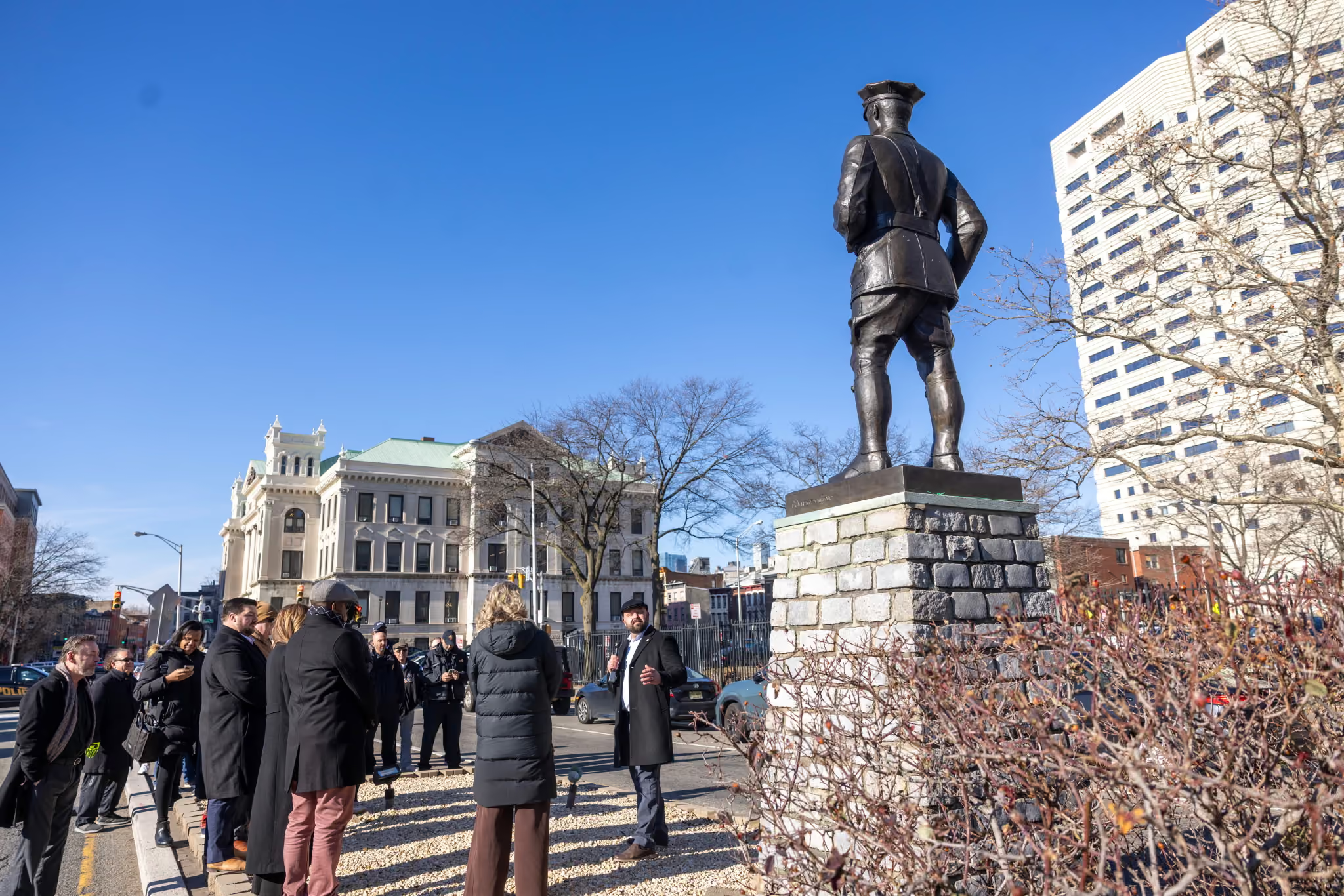
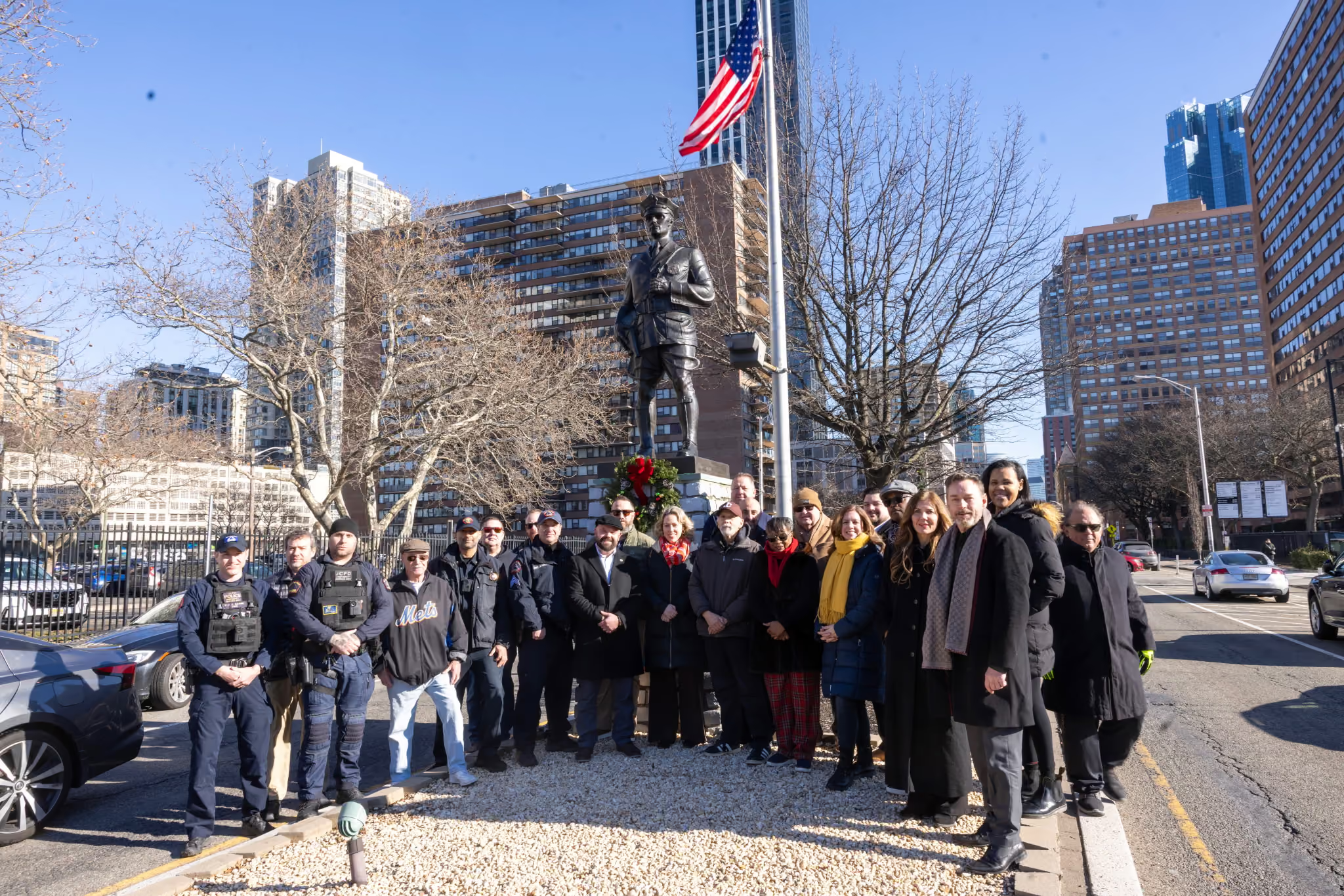
The statue at its current site, with the modern Jersey City skyline behind it.
Afterthoughts
In the intervening years, Police Week, celebrated every May, was held on Awards Day at either the PATH Plaza in Journal Square or Liberty State Park. The silent statue was largely ignored except for an occasional wreath, without fanfare. The shrubbery became overgrown and began to surround the memorial.
Detective Frank Sprague became engrossed in the Department's history and its officers who died in the line of duty, doing all the research on his own time at the Jersey City Public Library's microfilm archives. His completed list was staggering and eye-opening: over thirty officers had died in the line of duty, and there was no permanent monument for them or their deeds.
With all due respect, I requested through channels the possibility of moving the statue again, out of the busy setting it was in, which defied a gathering of more than five people. I suggested it be placed in front of City Hall to the right of the Soldiers' and Sailors' Monument, where it would enable a large gathering to pay their respects easily, with no interruption of traffic. The Department hierarchy agreed. I spoke with a stonecutter who would create a new base with the names of all the officers who died in the line of duty; the cost would be minimal. The request went to the city architect, who immediately nixed the idea — the administration in late 1993 was not receptive.
I still believe that a permanent memorial should be made to these fallen officers, true heroes. There are also many heroes who were involved at the inception of the statue, through the horrible vandalism, the reconstruction, and its re-dedication. I salute them all.
Researched By
Detective Frank Sprague, who documented over thirty line-of-duty deaths on his own time at the Jersey City Public Library — work that led directly to this history.
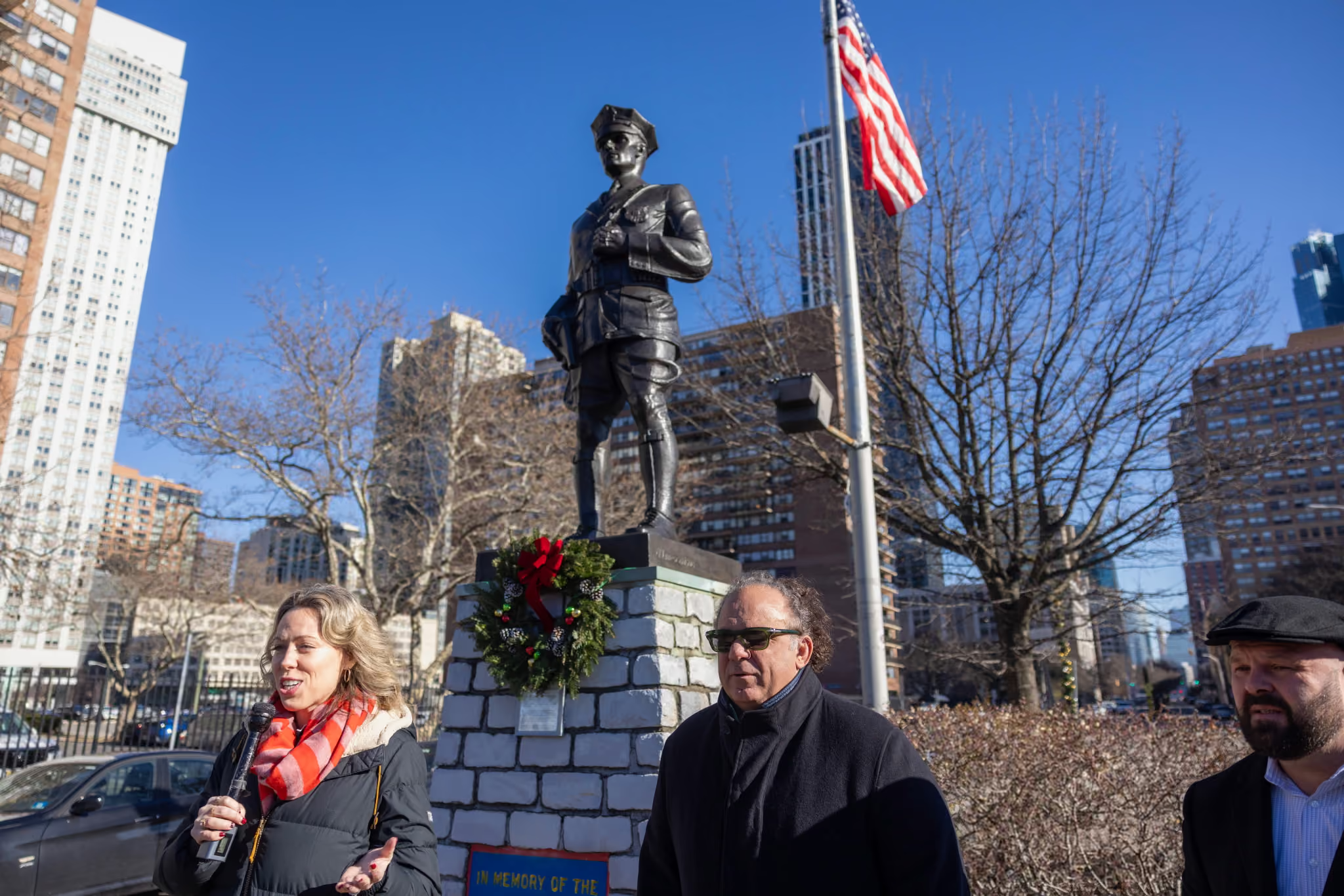
P.S. The granite block from 1936 still stands in Bayview Cemetery, in tribute to the deceased members inscribed thereon. Studs protruding through the top of the memorial are mute testimony to the odyssey of the statue which once proudly stood there.
Amen.